MINGKAI Paper Products

Soup cups

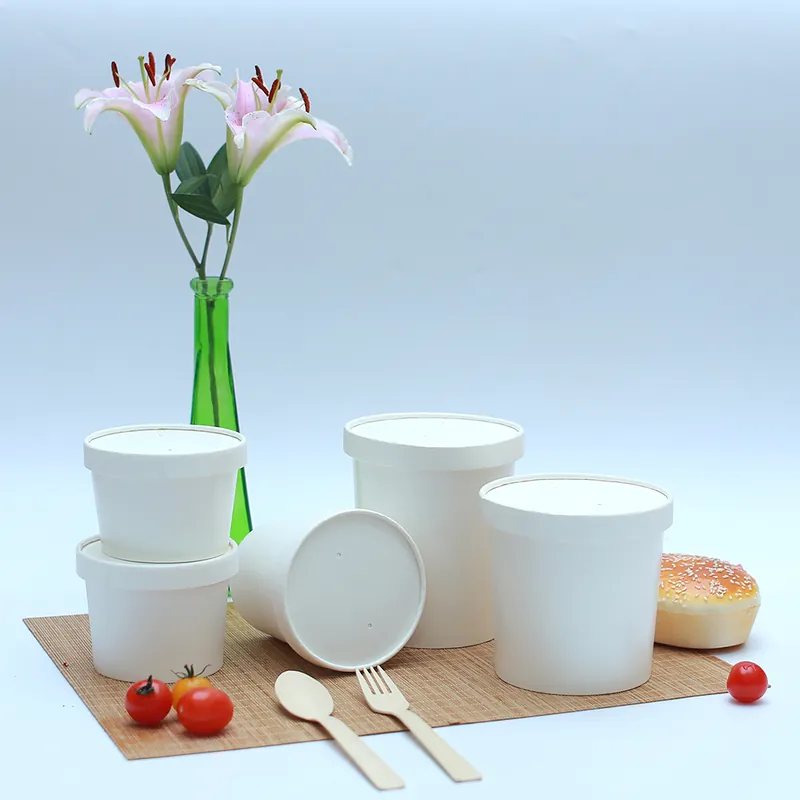
Soup cups and hot-food containers, 8oz to 32oz

Tall bodies, wide rims and lids that vent — the format that carries hot liquid through a delivery bag without the seam failing or the lid lifting. Six sizes from 8oz to 32oz, plus a 12oz body that stacks inside the wider series so one lid covers the menu.

Formats
2
Dimensioned sizes
10
Barrier options
3
Certification
flustix FPPC025

The engineering problem behind a soup cup

Hot liquid does three things at once: it softens the board, it pressurises the headspace, and it attacks the seam. A soup cup is therefore a different construction from a drink cup — heavier board, a wider rim for the lid to lock onto, and a barrier that survives 90°C for the length of a delivery.

The 12oz-90 body in this range exists for a practical reason. It takes a 90mm lid and nests inside the 98mm series, so an operator can run one lid size across the whole menu instead of stocking three. Small detail, large effect on the storeroom.

Formats and dimensions

Every size below is a tooled size held in this range. Dimensions are nominal — confirm tolerances before artwork or lid tooling is committed.

Soup cups and food containers

Tall-format cups from 8oz to 32oz with vented or sealed lids, built for hot soup, noodles and porridge in delivery.

  • Water-based dispersion Plastic-free claim supportable — covered by flustix FPPC025 on the water-based range.
  • PLA (compostable bioplastic) Compostable under EN 13432 in industrial conditions. PLA is a bioplastic, so it is not plastic-free.
  • PE (conventional) Conventional polyethylene barrier. Not part of any plastic-free claim.
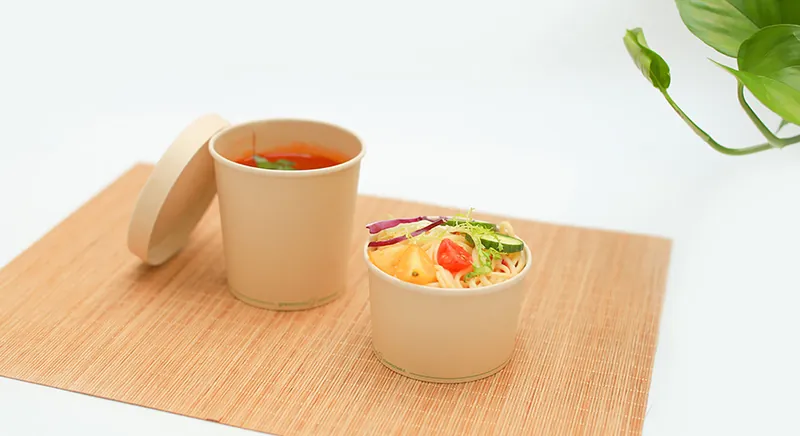
Mingkai paper packaging soup cups and food containers — product view Mingkai paper packaging soup cups and food containers — detail Mingkai paper packaging soup cups and food containers — detail
SizeTop Ø (mm)Bottom Ø (mm)Height (mm)Packing (pcs × bags)
8oz98816025 × 20
12oz98817125 × 20
12oz-9090748625 × 20
16oz98769925 × 20
26oz1189610825 × 20
32oz1189313125 × 20

The 12oz-90 body takes a 90mm lid and stacks inside the 98mm series — useful when one lid size has to serve the whole menu.

Used for Soup · Noodles · Porridge · Stew

Lids: paper, PP and rPET

Vented paper lids, PP sip lids and rPET dome lids, matched to the cup diameters used across this range.

  • Water-based dispersion Plastic-free claim supportable — covered by flustix FPPC025 on the water-based range.
  • PLA (compostable bioplastic) Compostable under EN 13432 in industrial conditions. PLA is a bioplastic, so it is not plastic-free.
  • PE (conventional) Conventional polyethylene barrier. Not part of any plastic-free claim.
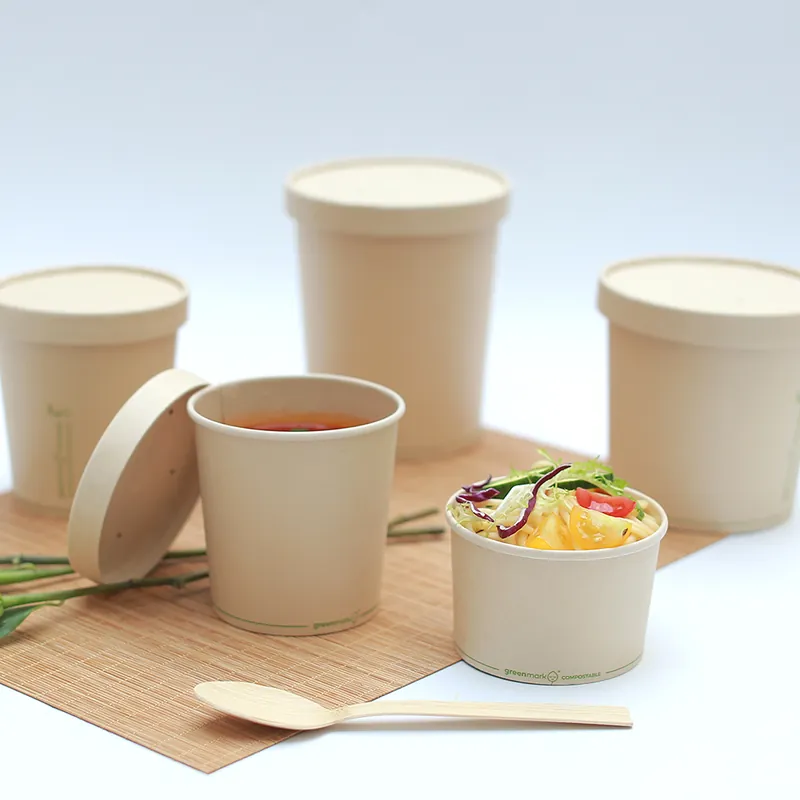
Mingkai paper packaging lids: paper, pp and rpet — product view Mingkai paper packaging lids: paper, pp and rpet — detail
Lid typeFitsMaterialVentNotes
Paper lid90 / 98mm cupsBoard, water-based coatedPerforatedSame waste stream as the cup
PP sip lid80 / 90mm cupsPPOpen sip holeHot and cold
rPET dome lid90 / 98mm cupsrPETClosed domeCold drinks, desserts
Sealing filmSoup cupsAluminium or PLA film—Applied on filling line

Lid and cup must be quoted together — a 1mm mismatch is the most common cause of leaking in transit.

Used for All

Hot fill, and what it does to your paperwork

Hot-fill articles are tested as finished articles under the conditions they are used in.

01
Migration testing must state hot-fill conditions
A report issued for a 20°C storage scenario does not cover a cup filled at 90°C. Check that the test conditions in the report match how the cup is actually used — this is the single most common documentation gap we see.
02
The lid material defines the packaging item
A vented paper lid keeps the item mono-material and inside the same waste stream. A PP or rPET lid puts plastic into the item. Both are legitimate; only one supports a plastic-free claim for the assembled pack.
03
A sealing film is not a lid
Where the container is sealed with aluminium or PLA film on a filling line, the item is multi-material and the film decides the recycling route. Specify the seal and the container together.

Three mistakes in soup-cup specifications

  1. Specifying by volume only. A 16oz body with a 98mm rim and a 16oz body with a 76mm rim hold the same liquid and fit nothing in common.
  2. Testing at ambient when the fill is at 90°C — the report will not support the use.
  3. Mixing lid standards across a menu and inheriting three different waste-stream claims.

Where this format is used

Noodle and ramen delivery

Tall bodies with vented lids so steam escapes without softening the rim.

Soup and porridge

8oz to 16oz formats for single portions, 26oz and 32oz for sharing.

Hot-food counters

Counter-service formats where the lid has to survive a carry tray.

Meal kits

Sealed variants where film replaces a lid on the filling line.

Questions buyers ask about this range

Will a paper lid hold hot soup?

A vented paper lid holds it for the delivery window, provided the fill level leaves headspace. For longer holding or stacked transport, a PP or rPET lid with a gasket is the safer specification.

Can the same lid fit both 8oz and 32oz?

Yes within one rim series — the 98mm lid covers 8oz to 32oz in this range. The 12oz-90 body is the exception and needs a 90mm lid.

Is the water-based coating rated for hot liquid?

It is used on hot-fill articles in this range, but the rated condition comes from the test report for the specific article. We will quote the report reference with the specification rather than generalise.

Related

Printing and customisation live on our sister site

Artwork, print, die-line changes and volume pricing are handled by kysonpack.com, which runs the same production base. This site stays on materials, certification and documentation — so the answer you get here is about what can be evidenced, not what can be printed.

Send us the claim you need to defend

Product form, target market, intended claim. Three lines are enough for us to tell you which documents exist and which have to be obtained.

01
We check whether a certificate or report exists for that exact product.
02
You get the document list, including the gaps.
03
If a claim cannot be evidenced, we say so before price is discussed.

We reply in writing. No mailing list, no follow-up sequence.