MINGKAI Paper Products

Carry bags

Paper bags for takeaway and retail

Four formats, one decision: does the bag have to carry a hot meal box, or a retail purchase? A flat kraft bag and a grease-resistant delivery bag look similar and behave nothing alike.

Formats
1
Dimensioned sizes
4
Barrier options
1
Certification
flustix FPPC025

Gusset depth is the specification that matters

Bag sizes are written as width × gusset × height. The gusset is the folded side panel, and it is what decides whether a 46oz meal box fits without tilting. Two bags with the same width and height and different gussets are different products.

The second variable is the liner. A standard kraft bag wicks grease within minutes; a bag with a grease-resistant liner or a PE coating does not. For delivery of hot food this is not a detail — it is the difference between a bag that arrives intact and one that marks the customer’s table.

Formats and dimensions

Every size below is a tooled size held in this range. Dimensions are nominal — confirm tolerances before artwork or lid tooling is committed.

Paper bags

Flat, twisted-handle and die-cut handle bags in kraft or white board — carry-out, retail and delivery formats.

  • PE (conventional) Conventional polyethylene barrier. Not part of any plastic-free claim.
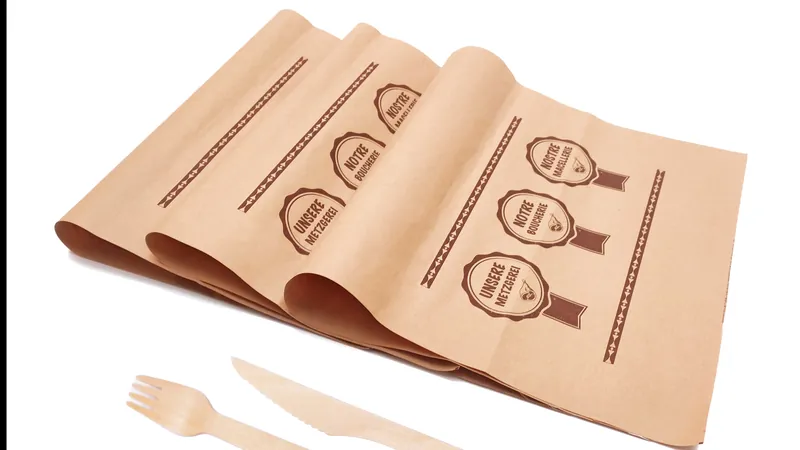
Mingkai paper packaging paper bags — product view Mingkai paper packaging paper bags — detail
FormatTypical sizesBoardHandleNotes
Flat bagSmall / medium / largeKraft 80–120 gsmNoneCheapest per unit
Twisted handleMedium / largeKraft 100–150 gsmTwisted paperRetail and grocery
Die-cut handleMedium / largeWhite or kraft boardDie-cutWidest print area
Food delivery bagLargeKraft, grease-resistant linerFlat or twistedHot-food compatible grades

Bag sizes are quoted by width × gusset × height in mm; gusset depth is what decides whether a meal box fits.

Used for Retail · Takeaway · Grocery

Bags and the part nobody asks about

A carry bag is packaging, and food-contact rules apply the moment it touches food.

01
A greasy bag is a food-contact article
Once the bag is in contact with unwrapped food, the liner becomes a food-contact material and needs the corresponding declaration. Bags used only for closed boxes are packaging, not food-contact — a distinction worth writing into the specification.
02
Recycled content changes the paperwork
Recycled fibre is welcome under EUDR and PPWR pressure, but it requires a migration assessment for the recycled stream. A recycled-content claim without that assessment is incomplete.
03
Handles are a separate material
A twisted paper handle keeps the bag mono-material. A plastic or laminated handle does not — and that single component decides the waste stream for the whole bag.

Three mistakes in bag specifications

  1. Quoting by width and height and forgetting the gusset.
  2. Using an unlined kraft bag for hot, greasy food and blaming the board.
  3. Specifying a plastic handle on a bag that is otherwise paper — it decides the classification.

Where this format is used

Takeaway and delivery

Grease-resistant lined bags sized to the meal box.

Retail

Twisted handle bags in kraft or white, printed with the shop identity.

Grocery

Flat and die-cut handle formats bought by the carton.

Events

Small flat bags for samples and merchandise.

Questions buyers ask about this range

Is a kraft bag compostable?

Plain kraft with no liner is paper and behaves as paper. A PE-lined or grease-resistant coated bag is a coated product and needs its own assessment — “kraft” describes the fibre, not the barrier.

Can the bag be printed?

Printing is handled by kysonpack.com, which runs the same production base. This site covers materials, barriers and documentation.

Do you supply bags with recycled content?

Yes, with a migration assessment for the recycled fibre stream. Tell us the recycled percentage required and the food contact scenario.

Related

Printing and customisation live on our sister site

Artwork, print, die-line changes and volume pricing are handled by kysonpack.com, which runs the same production base. This site stays on materials, certification and documentation — so the answer you get here is about what can be evidenced, not what can be printed.

Send us the claim you need to defend

Product form, target market, intended claim. Three lines are enough for us to tell you which documents exist and which have to be obtained.

01
We check whether a certificate or report exists for that exact product.
02
You get the document list, including the gaps.
03
If a claim cannot be evidenced, we say so before price is discussed.

We reply in writing. No mailing list, no follow-up sequence.